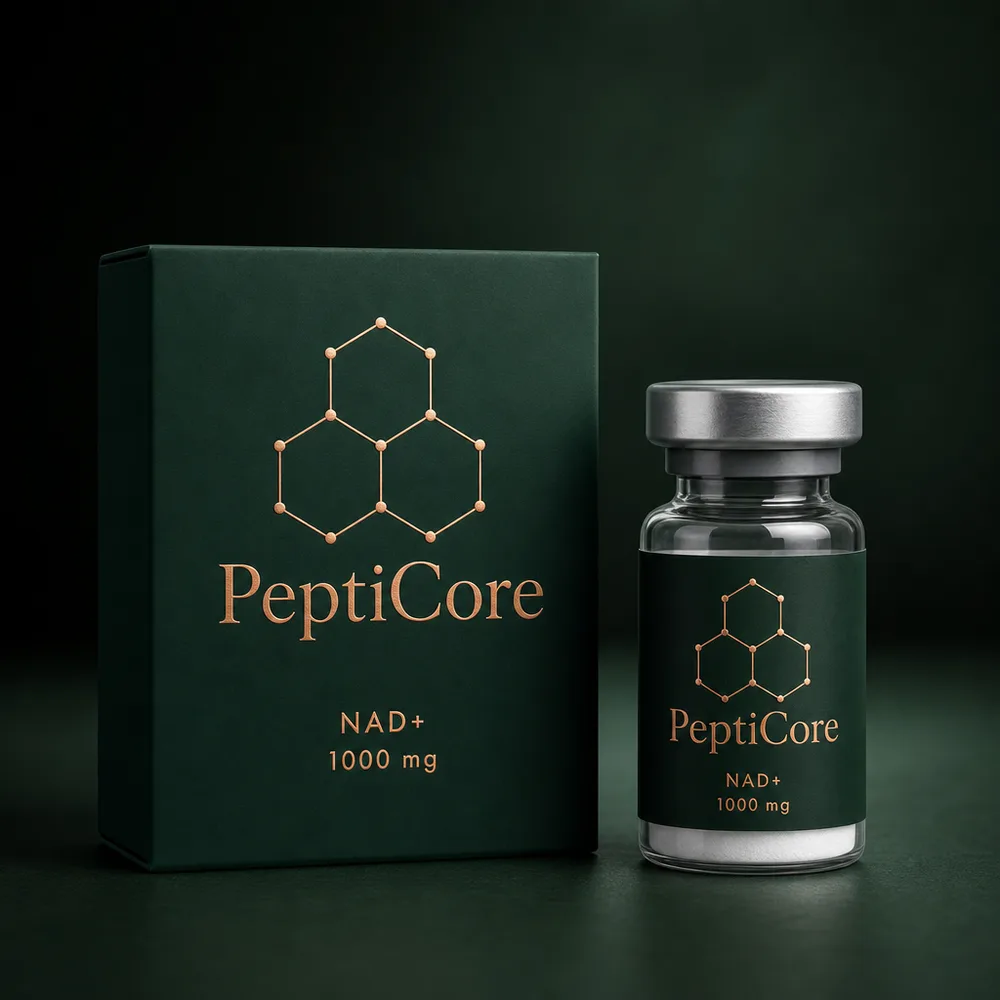
NAD+
1000 mg
Central coenzyme of redox metabolism and DNA-repair processes. It is studied for its decline with age and for its role in mitochondrial function and sirtuin activity.
- Studied for its role in cellular energy production
- Investigated in DNA-repair pathways
- Studied in cellular-longevity research
- Substrate of sirtuins and PARPs
Scientific context
Origin, mechanism, and research
NAD+ was discovered in 1906 by Arthur Harden and William Young in yeast extracts; Conrad Elvehjem (1936) identified nicotinamide — vitamin B3 — as its precursor. It is not an approved drug for anti-aging use; its use in IV infusions is not regulated as a therapy, though precursors like NMN and NR have early-stage human safety clinical trials. It is the central coenzyme of redox metabolism (glycolysis, the Krebs cycle, oxidative phosphorylation) and a substrate for sirtuins and PARPs, enzymes linked to cellular aging. Distinctive fact: via IV its plasma half-life is ultra-short (1-5 minutes, quickly metabolized to NMN/nicotinamide).
Information for educational and informational purposes, based on public sources; it does not constitute medical advice. Product for laboratory research use only — not for human consumption.