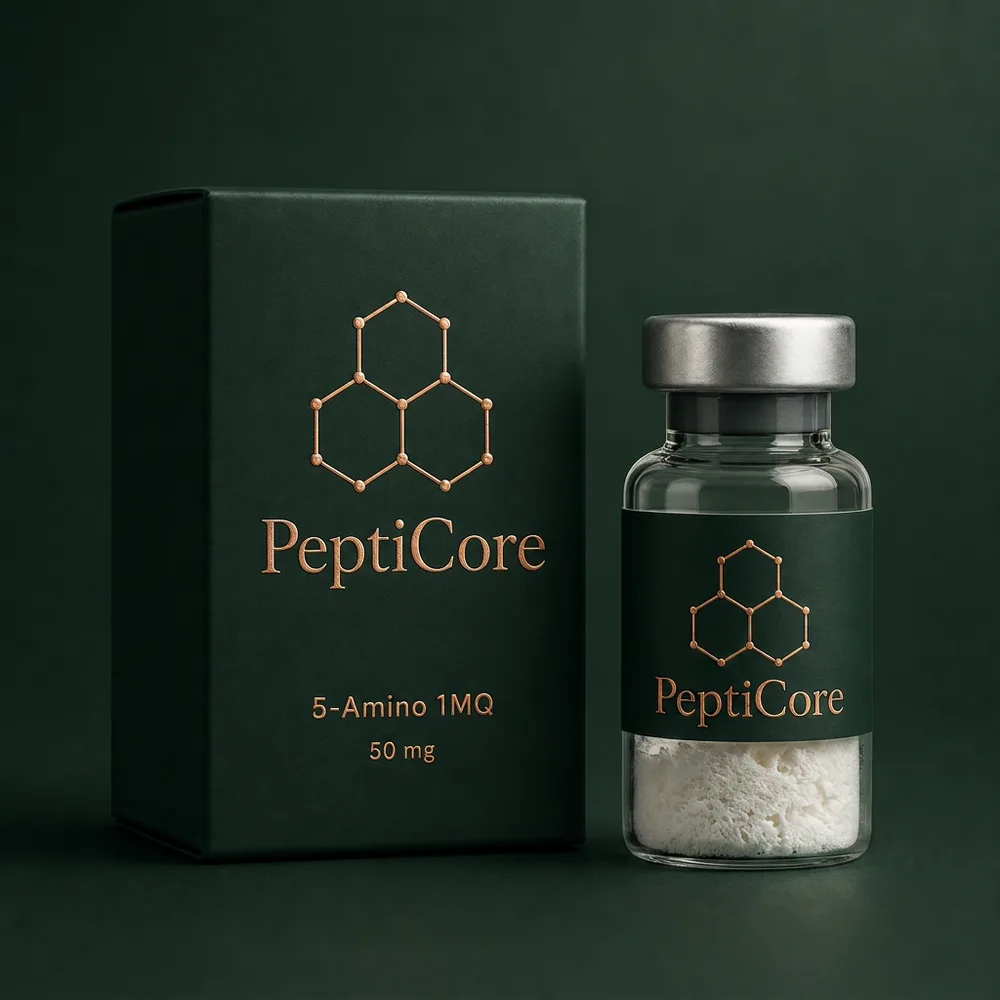
5-Amino 1MQ
5 mg
NNMT enzyme inhibitor investigated for its effect on NAD+ levels in adipose tissue. Preclinical literature describes increased lipid oxidation and changes in basal metabolic rate in animal models.
- Studied for its effect on adipose tissue growth
- Investigated for changes in basal metabolic rate
- Studied for its effect on cellular NAD+
- Effects on muscle performance observed in animal models
Scientific context
Origin, mechanism, and research
This is a small quinolinium-type molecule (not a peptide), first characterized as a selective inhibitor of the enzyme nicotinamide N-methyltransferase (NNMT) in studies published between 2017-2019. Its status is purely preclinical: no published human clinical trials exist, nor any regulatory approval. Mechanically, it competitively inhibits NNMT — which normally consumes S-adenosylmethionine (SAM) to methylate nicotinamide, depleting the cellular SAM and NAD+ pool — preserving nicotinamide for the NAD+ salvage pathway and redirecting metabolism toward fatty-acid oxidation. In high-fat-diet mouse models, it produced less weight gain, less fat mass, and better glucose tolerance — all in animals, with no human data.
Information for educational and informational purposes, based on public sources; it does not constitute medical advice. Product for laboratory research use only — not for human consumption.